Environment

Committed to sustainability and lessening our environmental impact.

We recognize the importance of protecting the environment and improving the world for generations to come. We have initiated steps to become a greener, more environmentally conscious organization. 

 

Green Vibes Program

The Green Vibes program continues to drive Atlantic Union Bank’s commitment to environmental stewardship by reducing operational impact and expanding opportunities for Teammates to engage in environmental learning, service and sustainable practices. Since launching in 2023, the program has focused on practical, measurable improvements—partnering with vendors to refine purchasing, eliminate unnecessary plastics and identify opportunities to conserve natural resources.

Atlantic Union Bank continues to reduce energy consumption through the GridPoint Energy Management System, now deployed across 87 branch locations. In 2025, this system helped achieve a 25% average reduction in energy use, saving 500 kW of power—an emissions reduction equivalent to the carbon sequestration of more than 440 acres of forest in one year. Additional efforts include offering recycling services at all corporate office locations, reducing single use plastics and prioritizing sustainable office equipment and supplies when feasible. Atlantic Union Bank also donates phased out equipment and furniture to partner organizations and businesses whenever possible, extending the life of usable materials and reducing the volume of waste sent to landfills.

In 2025, Green Vibes also created meaningful opportunities for Teammate engagement through a week-long Earth Week celebration. More than 130 Teammates participated in environmental education sessions led by the Chesapeake Bay Foundation and Virginia Master Gardeners, joined a Green Vibes Bingo challenge and attended Atlantic Union Bank Eco Fest, which featured eight Richmond-area organizations focused on environmental stewardship.

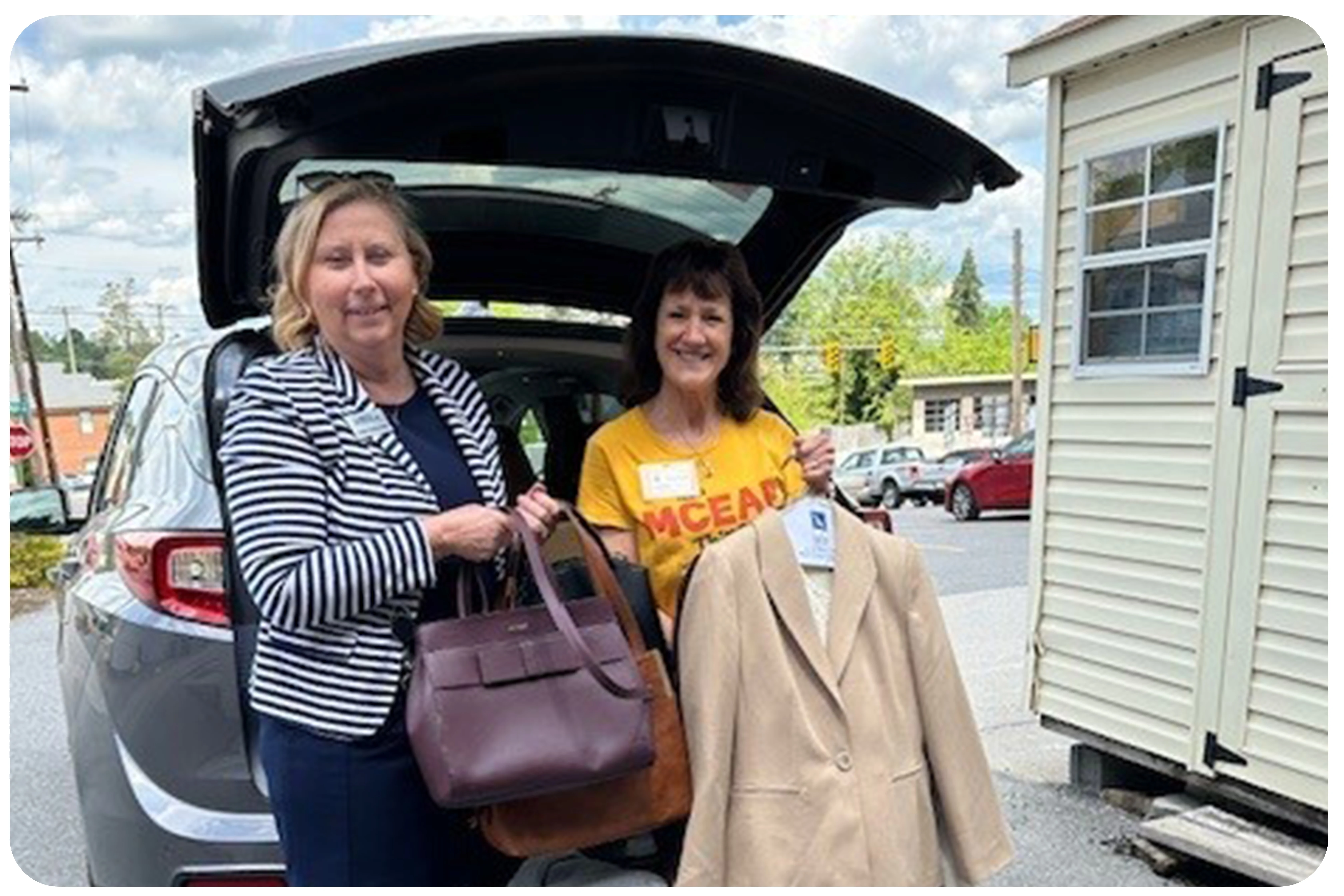
The largest Earth Week initiative—the Green Vibes Professional Clothing Drives—spanned nine locations and collected more than 1,500 items. These donations support individuals seeking stable employment while diverting textiles from landfills. With the average American discarding approximately 81 pounds of clothing each year, the initiative delivered measurable benefits for both people and the planet.


“The thoughtful contribution from Atlantic Union Bank has made a meaningful impact on the lives of our students, allowing them to step into interviews, networking events and professional environments with greater confidence and a sense of pride. Your commitment to student success reflects the very best of what community partnership should look like.”

Dr. Arifah N. Goodwin, Assistant Director of Employer Relations, Virginia State University


volunteers
volunteers
volunteers


Smarter Services, Smaller Footprint

online icon

We remain committed to delivering an excellent customer experience while actively reducing our environmental footprint. A core part of this effort is expanding and promoting our digital service options, which significantly reduce the need for paper-based processes across the bank.

Today, more than half of our customers receive their statements electronically, eliminating the need for printed mailings and saving an estimated 750 trees each year. Many customers also open new accounts online, reducing the paperwork traditionally required in branches and lowering overall consumption of printed materials.

We also modernized our approach to customer communications by eliminating mass printed brochures and promotional materials in our branches and offices. Instead, we use a print on demand system, ensuring materials are produced only when needed and preventing unnecessary waste from outdated stock.

In addition to reducing paper use on the front end, we are also committed to responsible disposal practices. Through our secure shred program, we recycled 297.58 US short tons of paper, which equates to 5,059 trees saved. This reflects not only our focus on operational efficiency but also our broader commitment to environmental stewardship.


Green Investments:

bus icon

Atlantic Union Bank supports our partners who wish to be more environmentally friendly. We make capital available to help businesses and communities implement green technology and accelerate the transition to a more sustainable future. In 2025, we provided $29.4 million in financing for projects like photovoltaic electricity generation systems and electric school bus fleets.

In addition to project specific financing, Atlantic Union Bank manages a $54.5 million Green Investment Portfolio dedicated to environmentally beneficial initiatives. This portfolio supports a wide array of sustainability efforts, including renewable energy development; energy efficient infrastructure upgrades; construction of high efficiency green buildings; sustainable water and wastewater management solutions; and investments in clean transportation and transit improvements.


Partner Highlight: Tech for Troops

Atlantic Union Bank's partnership with Tech for Troops illustrates how environmental sustainability, workforce development and community engagement can intersect to create meaningful impact. Tech for Troops is a nonprofit organization dedicated empowering under-resourced Veterans and their families by providing lifelong digital skills through training, education and technology. They refurbish donated electronics and put them in the hands of veterans, helping bridge the digital divide while supporting successful transitions into civilian life.

Through this partnership, Atlantic Union Bank has diverted substantial volumes of electronic waste from landfills. In the past year alone, the bank donated technology valued at more than $475,000. These refurbished devices help veterans access technology to reach their goals of educational attainment, financial security and career advancement.

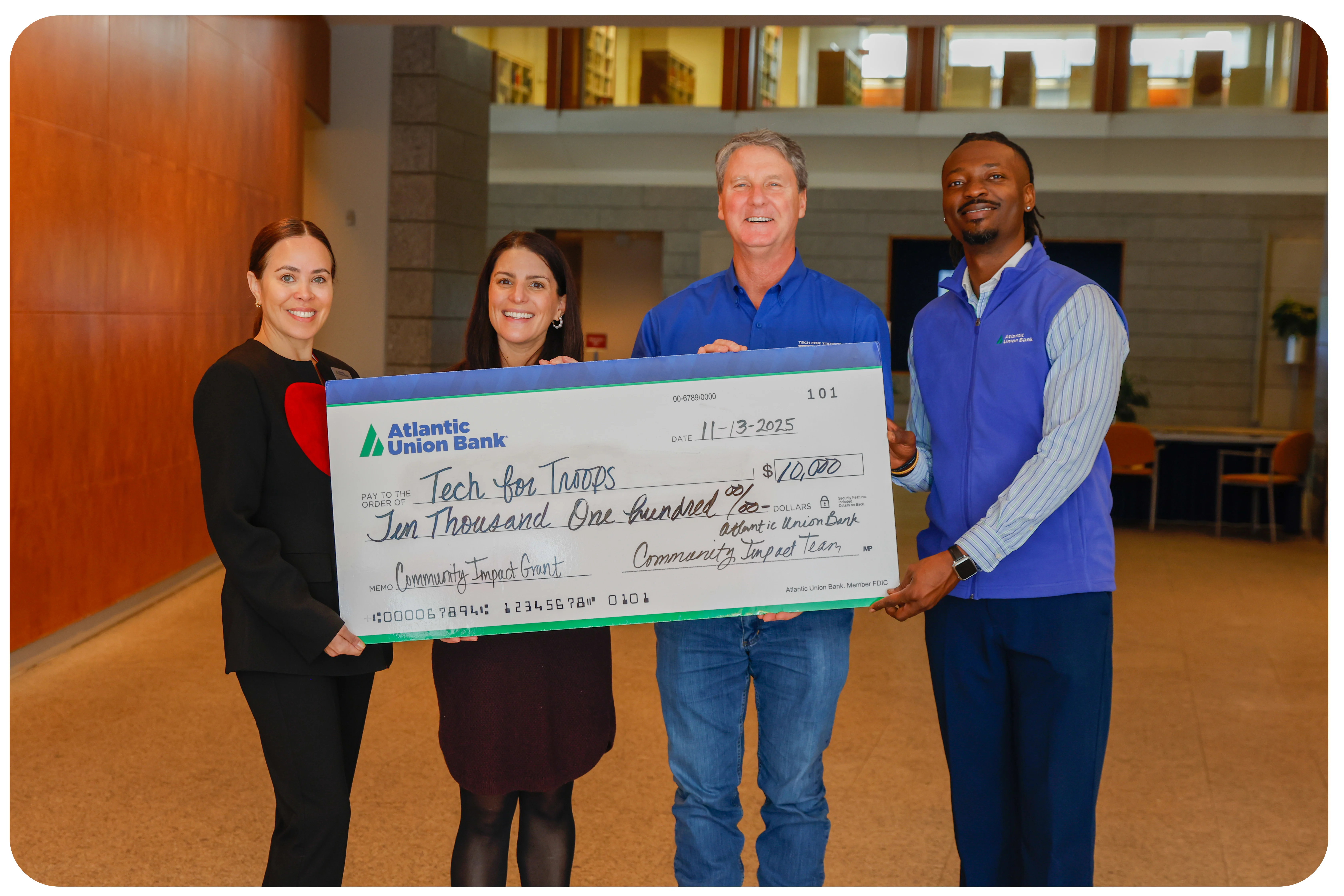
Atlantic Union Bank's support extends well beyond equipment donations. In 2025, Tech for Troops was awarded a $10,000 grant to further their mission and workforce development programs. Teammates across the organization also volunteer their time and expertise—ranging from Enterprise Technology team members assisting with refurbishment efforts and providing board leadership, to bankers delivering financial education workshops for program participants.

Together, Atlantic Union Bank and Tech for Troops demonstrate how thoughtful reuse of resources can reduce environmental impact while expanding opportunity—proving that sustainability efforts can deliver lasting change.


"The Atlantic Union Bank and Tech For Troops model for corporate partnership is a premier example of how a "social enterprise" strategy can solve both business and community challenges simultaneously. We both understand that decommissioned IT equipment isn't just e-waste; it’s a career tool for a Veteran and a way to protect our environment simultaneously. …This model is more than a sponsorship; it is a tactical alignment. It proves that when a corporation aligns its operational needs (secure data destruction and e-waste management) with a nonprofit’s capabilities (refurbishment and Veteran training), the result is a lasting, measurable impact on both the planet and the people who served it."

- Mark Casper, Tech for Troops President & CEO


check presentation

tech for troops


Environmental Goals

Atlantic Union Bank supports the United Nations Sustainable Development Goals

These goals provide a shared blueprint for peace and prosperity for people and the planet, now and into the future. 
7 afforable and clean energy11 susatianable citires and communities12 responsible consumption and production13 climate action


Cautionary Information and Forward–Looking Statements

The information provided in this report reflects Atlantic Union Bankshares Corporation’s (the “Company”) approach to corporate social responsibility related matters as of the date of publication and is subject to change without notice. Our approach to inclusion of disclosures in this report is different from disclosures included in mandatory regulatory reporting, including under U.S. Securities and Exchange Commission (“SEC”) regulations, if applicable. Any inclusion of information in this report is not an indication that the subject or information is material to us for SEC reporting purposes or any other purposes, including any investment or voting decision with respect to Company securities. This report is intended to highlight some of the work of the Company in the areas of corporate social responsibility. It is not comprehensive or necessarily representative of all of our activities in those areas. 

This report contains certain forward–looking statements within the meaning of the Private Securities Litigation Reform Act of 1995, including, without limitation, statements relating to our plans, expectations, efforts, programs, goals, projections, and statements that include other projections, predictions, expectations or beliefs about future events or results or otherwise are not statements of historical fact. Such forward-looking statements are based on certain assumptions as of the time they are made, and are inherently subject to known and unknown risks, uncertainties, and other factors, some of which cannot be predicted or quantified, that may cause actual results, performance, or achievements to be materially different from those expressed or implied by such forward-looking statements. Forward–looking statements are often characterized by the use of qualified words (and their derivatives) such as “expect,” “seek to,” “strive to,” “anticipate,” “vision,” “committed,” “believe,” “intend,” “estimate,” “continue,” “plan,” “project,” “target,” “goal,” “will,” “may,” “view,” “potential,” or words of similar meaning or other statements concerning opinions of judgment of the Company and our management about future events. Although we believe that our expectations with respect to forward-looking statements are based upon reasonable assumptions within the bounds of our existing knowledge of our business and operations, there can be no assurance that actual future results, performance, or achievements of, or trends affecting, us will not differ materially from any projected future results, performance, achievements or trends expressed or implied by such forward-looking statements. Actual future results, performance, achievements or trends may differ materially from historical results or those anticipated depending on a variety of factors, including, but not limited to: changes in general economic, political, or industry conditions particularly in the markets in which we operate and which our loans are concentrated, including the effects of declines in real estate values, inflation, an increase in unemployment levels, U.S. fiscal debt budget and tax matters, U.S. government shutdowns, and slowdowns in economic growth; changes in market interest rates and their related impact on macroeconomic conditions, customer and client behavior, our funding costs, and our loan and securities portfolio; volatility and disruptions in capital and credit markets or in the financial services sector; competitive pressures on product pricing and services; success, impact, and timing of our business strategies; legislative or regulatory changes and requirements, including changes impacting the rulemaking, supervision, examination and enforcement priorities of the federal banking agencies; monetary, fiscal and regulatory policies of the U.S. government; potential claims, damages, and fines related to litigation or government actions; technological risks and developments, and cyber threats, attacks, or events; and data quality and availability. Please also refer to such other factors as discussed throughout Part I, Item 1A. “Risk Factors” and Part II, Item 7, “Management’s Discussion and Analysis of Financial Condition and Results of Operations” of our Annual Report on Form 10–K for the year ended December 31, 2025, and related disclosures in other filings, which have been filed with the SEC and are available on the SEC’s website at www.sec.gov. All risk factors and uncertainties described herein and therein should be considered in evaluating forward-looking statements, and all the forward-looking statements are expressly qualified by the cautionary statements contained or referred to herein and therein. Readers are cautioned not to rely too heavily on forward-looking statements, which speak only as of the date they are made. We do not intend or assume any obligation to update, revise or clarify any forward-looking statements, whether as a result of new information, future events or otherwise, except as required by law. 

No reports, documents or websites that are cited or referenced to in this report shall be deemed to form any part of this report. Information contained in this report that has been obtained from third-party sources, including those publicly available, is believed to be reliable, but no representation or warranty is made by the Company as to the quality, completeness, accuracy, fitness for a particular purpose or non-infringement of such information. Sources of third-party information referred to herein retain all rights with respect to such data and use of such data by the Company herein shall not be deemed to grant a license to any third party.

This report was published on March 10, 2026.

Cookie Notice: We use cookies and similar automated technologies through which we and certain third parties (such as our advertising and analytics partners) may collect, record, use and share information about your use of our site to enhance user experience, analyze performance and usage, and assist in our marketing efforts. You can reject nonessential automated technologies by selecting ‘Decline All’. For more information, visit our Online Privacy Notice.